
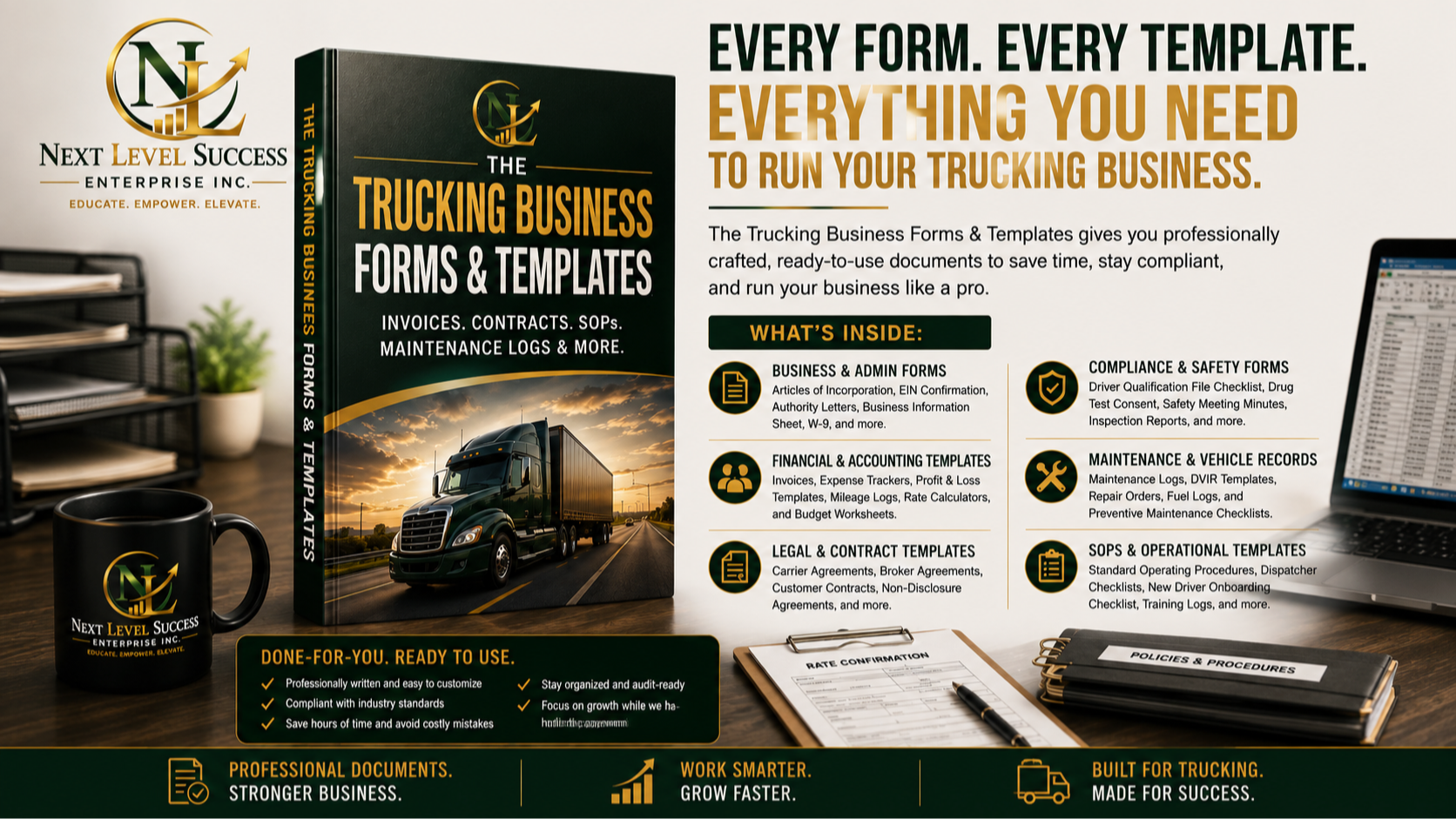
The Trucking Business Forms & Templates
Designed for trucking business owners who want to stay organized and operate more professionally, this practical resource brings essential business forms, templates, logs, checklists, and operational documents together in one convenient place. Instead of creating important paperwork from scratch, you’ll have structured documents that can help you manage the administrative and operational side of your trucking business more efficiently.
Inside, you’ll find resources covering key areas such as business administration, financial tracking, contracts, compliance, safety, vehicle maintenance, driver management, and standard operating procedures. The templates are designed to help you create stronger systems for documenting important information, keeping records organized, tracking business activity, and maintaining consistency as your company grows.
You’ll also receive tools to support invoicing, expense tracking, profit and loss management, mileage records, budgeting, rate calculations, maintenance tracking, vehicle inspections, driver files, safety meetings, onboarding, dispatch operations, and other everyday business responsibilities. Contract and agreement templates provide a starting structure for documenting business relationships and expectations while allowing you to customize information for your specific operation.
For owners building a team or expanding their fleet, the operational templates can also help establish repeatable processes for driver onboarding, training, dispatching, maintenance, recordkeeping, and other routine responsibilities. Having documented systems in place can make it easier to stay organized as more trucks, drivers, customers, and responsibilities are added to the business.
Whether you are starting your first trucking company or strengthening an existing operation, this resource is designed to help you spend less time figuring out paperwork and more time managing your business. Use the forms and templates as practical tools to create better organization, maintain important records, develop consistent processes, and build a more professionally managed trucking operation.